What's Actually in Your Topical Lotion?
Pick up three different topicals from a shelf and the labels will not agree on much. One feels icy. Another feels like it is heating from the inside out. A third smells like a flower bed. They cannot all be doing the same thing, because they are not.
The differences come from a small group of active ingredients, each of which is doing a different job at the receptor level in your skin. If you know what each one does, picking the right product stops being guesswork.
Menthol: The Cooling Agent
Menthol gets pulled out of peppermint and a few other mint plants. It is everywhere in topical products, and it works by latching onto a cold-sensing receptor in your skin called TRPM8.
When that connection happens, your skin tells your brain it is cold. The temperature of your skin has not actually changed at all. The signal just gets sent anyway, and the icy feeling pulls your attention away from whatever was bothering you underneath. Menthol also mildly opens the small blood vessels near the surface, which nudges blood flow toward the area you applied it to.
It is also fast. Most people feel the chill in about 30 to 60 seconds. Stronger formulas hold that sensation longer.
Menthol
Triggers the TRPM8 cold receptors in your skin to produce that immediate icy feel. Fast to kick in, gives a small boost to local circulation.
Best for: Right after a workout, hot or swollen hands and joints, anything where you want the cool feeling now.
Capsaicin: The Warming Agent
Capsaicin is the chemical that makes a chili pepper feel hot. In a topical, it does the opposite of what menthol does. It binds to the TRPV1 heat-sensing receptors in your skin and produces a warming, sometimes outright burning feeling.
Here is the quirky part. With repeated use, capsaicin slowly desensitizes the nerve endings in the area you are applying it to. That is the reason a lot of capsaicin creams are meant for daily use over weeks instead of one-off application. The initial sting eases after a few days, and after two to four weeks of steady use most people report less of the local discomfort they started with.
The catch is the adjustment period. Those first few applications can be genuinely uncomfortable. And capsaicin transfers to anything you touch with the same hand, including your eyes, so washing your hands afterward is not optional.
Capsaicin
Binds to TRPV1 heat receptors to produce a warming, sometimes burning sensation. Steady use over two to four weeks gradually desensitizes the area.
Best for: Chronic stiffness in one spot, if you are willing to stay consistent for several weeks.
Arnica: The Botanical Tradition
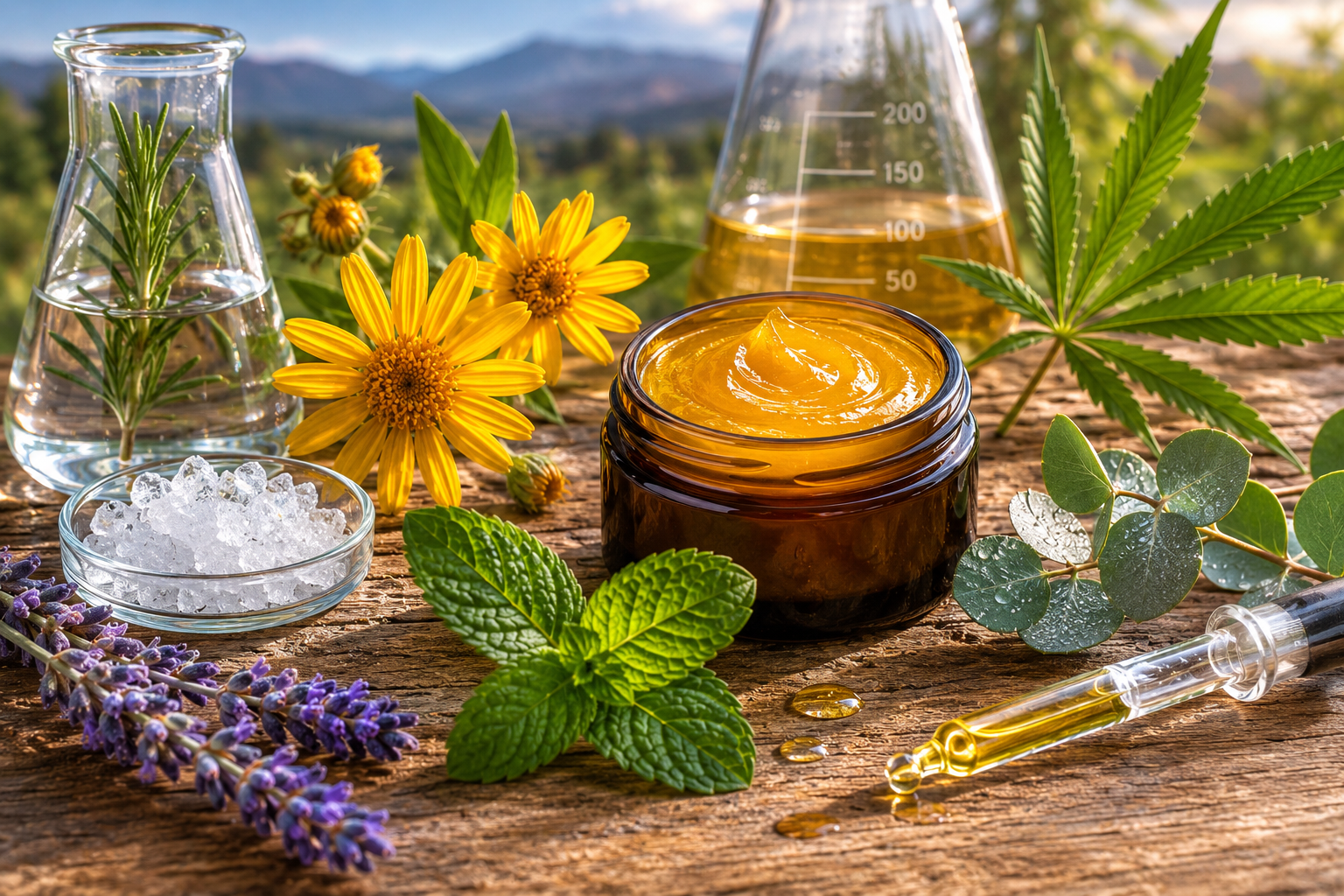
Arnica montana is a yellow flowering plant that European herbalists have been putting on sore muscles for hundreds of years. Arnica-based topicals are still among the most popular natural products people reach for after physical exertion.
The active compounds in arnica are a family called sesquiterpene lactones, with helenalin doing most of the heavy lifting. Researchers have looked at how helenalin interacts with the body's natural inflammatory pathways at the cellular level. The work continues. What is clear from use is that arnica works gently. You will not feel a hot or cold rush from it. The support is quieter and gradual.
The science on arnica is still being written. The tradition has had a long head start, and its place in European pharmacies has not shrunk.
Arnica
A flowering botanical with a centuries-long track record. Its sesquiterpene lactones, including helenalin, support the body's natural recovery without a strong sensory effect.
Best for: Steady daily use, people who do not want a hot or cold sensation, recovery after physical work.
Combining Ingredients for a Better Formula
Single-ingredient topicals exist, but the better formulas usually layer two or three complementary compounds so they hit different pathways at once. A few combinations that actually pull their weight:
- Menthol with eucalyptus and peppermint. A deep cooling blend. The eucalyptus opens the pores. The peppermint stretches out how long the menthol effect lasts.
- Arnica with lavender. Quieter on the skin. The gentle botanical action of arnica pairs with lavender's linalool, so your nervous system gets a small assist from the aroma at the same time.
- Menthol, arnica, and hemp extract together. Immediate cooling, slower arnica support, and phytocannabinoids talking to the receptors in your skin. Three different mechanisms, one application.
How to Choose the Right Topical for You
Want the fast icy hit after exercise or a long shift on your feet? Look for a high-menthol formula with supporting mint oils like peppermint and spearmint.
Prefer something quieter for everyday use? An arnica and lavender base will serve you well and you can apply it without anyone noticing you did.
Want both at the same time? A topical that combines menthol, arnica, and hemp-derived ingredients in one formula gives you the immediate sensation and the slower botanical support in the same application.